
Retention is a big stressor in business today. Google “how to retain employees in 2023,” and you’ll get more than 93 million search results full of excellent insights and recommendations. With countless strategies and endless… More

Retention is a big stressor in business today. Google “how to retain employees in 2023,” and you’ll get more than 93 million search results full of excellent insights and recommendations. With countless strategies and endless… More

Business vs. busyness … one letter makes a world of difference. As a founder, owner, or leader of a company, do you want to be fully engaged in building a successful business? The alternative is… More
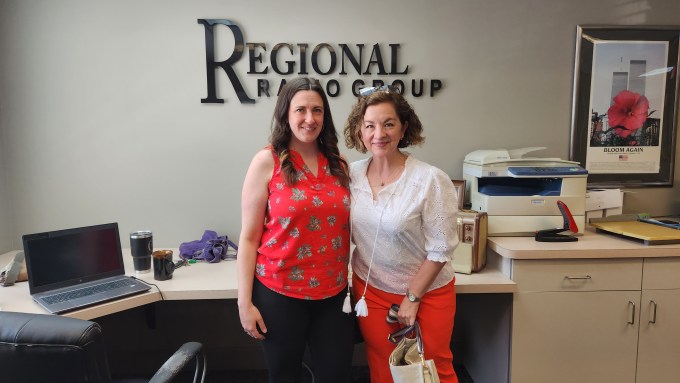
Wendy was recently interviewed on the I’m In With the ARCC Radio Show hosted by Amanda Blanton. They spoke about Wendy’s commitment to the local business community, the 5 Common Frustrations of Business Owners and… More


Great business owners are like octopuses. Surprised? But consider … octopuses are intelligent. They are skilled at solving problems. They are strong. They are flexible. They respond rapidly to their environment. And, with their eight arms – which contain an astonishing two-thirds of their total neurons – they can multitask in a truly enviable way! The octopus, however, does something with those eight arms that many business owners neglect. The octopus lets go.
Successful business owners are successful in large part because they, like the octopus, can do many things at once and do them very well. For instance, they can be great at making decisions and solving problems, innovating products and delivering services, capturing sales and building relationships, and more. The problem arises as the business grows: at some point, business owners cannot – and should not – do it all. If business owners insistently keep their “arms” in every area of the business, they ultimately end up limiting the success and sustainability of their treasured company.
Holding On Is Holding You Back
Here is a common scenario. A business owner has built a robust company, and the number of products, services, employees, customers, etc. have all expanded over time. In like manner, the leadership team has expanded. Finance, Sales, Marketing, Operations, and all the other functional areas are represented by men and women who are great at what they do.
The problem? They aren’t given the opportunity to show how great they really are.
Sure, they handle day-to-day matters. Even some strategic issues. But the big decisions, the vision, the direction, the goals, the planning … all of that is controlled by the owner. His or her “arms” are everywhere at once. Touching everything. Evaluating everything. Claiming everything. Leadership team meetings may have dialogue. The team members’ input may be requested. But the unspoken truth is that they are not a “leadership team.” They are a group of men and women who are there to carry out the intentions and decisions of the owner.
Unsurprisingly, this type of situation is self-limiting for multiple reasons. These include:
Why don’t business owners follow the octopus’ example and let go? Ninety-nine percent of the time, it comes down to this: a desire for control and a lack of trust. Now, this does not make the business owner a “bad” person. Incredibly kind, generous, caring, fantastic people may be reluctant to let go. After all, the business is their brainchild and represents years of intense effort and even sacrifice. It’s hard to trust others with something so precious! But releasing control and trusting others is necessary for the long-term health and well-being of the business.
5 Steps to Pull Back Your “Arms”
If you are a business owner who needs to pull back some of your “arms,” here are five steps to help you let go:
Remember, you have done a great job as a business owner bringing your company to where it is today. In the process, you undoubtedly learned new skills to overcome obstacles. Letting go is simply another skill. When you truly understand how letting go will help overcome obstacles that are preventing your business from continuing its upward trajectory, it will become easier to retract your “arms.” Once you do, there is no limit to the success your business can achieve!
Do you need help in letting go? Contact me today:
I’ll work with you and your leadership team to move toward an outstanding future!

This article originally appeared in the Saratoga Business Journal.
As we build the new normal and reconstruct our economy, let’s take a moment to get back to the basics. Whether you are an owner, foreman, manager or director, there are three things that every leader needs to be doing to make the most of every day. Bring the ABCs to the jobsite.
A – Avoid Busy-ness.
“Quick, look busy, here comes the boss.” It’s so classic it’s almost a cartoon, and yet most of us fall into this trap of “busy-ness” on a regular basis. Is it enough to “keep the guys working?” Well, are they doing profitable work? What do you really know about an office worker’s “production” by walking by their desk? When so many switched to work from home, did you lose a sense of knowing what they were doing?
Do you know what drives the profit in your business?
What key activities should be done each week and who is responsible for accomplishing those actions?
You need information now, not at the end of the quarter. Maintain a weekly scorecard listing the priority activities, the goal, and who is responsible for making them happen.
B – Boss Mode.
You are not leading a social group or choosing a restaurant for dinner. It’s important to make your expectations known. Imagine that you are coaching a basketball team. It’s your job to clarify the rules of the game. Do you really want all of the players running together in a pack playing offense and defense simultaneously? How can your team deliver if they don’t know exactly what’s expected?
Put the needs of the business first when you are working in the business. You will all need to practice, practice, practice. Repeat yourself and your expectations. And remember, coaching and cheerleading are not the same thing. You are the coach. Be specific with your praise, recognition of opportunity, and acknowledgement of effort.
C – Call to listen.
It’s common for an article like this one to talk about the need for “communication.” While true enough, such advice is hardly actionable. The best leaders establish a listening routine.
Your people are much more likely to open up when the opportunity predictably presents itself. Imagine the difference between these two scenes. One leader swoops in like a sea gull. They drop some messy “knowledge” in the way sea gulls tend to do and then ask, “so what’s up? What’s new? And did you see the game last night?” as they check their phone and continue walking.
The other one calls their staff member every Thursday at 8:30 a.m., or maybe they have a standing coffee date. They exchange quick stats or updates, then the leader listens to whatever their employee thinks is important. Smart managers take time to find ways they can improve the work environment, the core processes, and the end results.
As simple as these suggestions may sound, they are commonly not followed. Many of us try not to “be the bad guy” and instead let the players decide on the rules of the game. Somewhere along the line we associated “busy” with “profitable.” And even the most conscious of us can be guilty of being that person who only calls when they need something.
The best leaders recognize that these simple actions yield powerful results in every work environment.

Hello, friends!
I am excited to announce that I have completed my training as a Professional EOS Implementer®. I am one of only 419 Worldwide that has been given this unique opportunity.
EOS® (The Entrepreneurial Operating System®) is a powerful system that takes a holistic self-sustaining approach to building a great company. It helps a business owner get the most out of their business. We have delivered over 73,600+ full-day sessions for more than 9,900+ companies. As a result, companies:
Crystallize their vision, getting everyone on the same page and rowing in the same direction
Gain tremendous traction by building discipline and accountability into the organization
Create a healthy, functional and cohesive leadership team and company.
For actual client testimonials click here or here to watch a short 4 minute video. To give your organization a check-up click here.
This real world proven system is also captured in the award winning book Traction: Get A Grip On Your Business.
If you know of a business owner/entrepreneur that is frustrated and/or looking to get more out of their business, I’d appreciate the referral. You have my word, they’ll be in good hands and they’ll thank you for it.
– Wendy

Have you listened to the wisdom from the Adirondack Regional Chamber of Commerce’s Succession Planning Summit this fall?
Guidance from business leaders who are actively planning for their futures.
Take us with you while you walk off that extra slice of pie! Ponder, plan, and prepare!
WaldronWorks was happy to be a sponsor, leading the conversation about intentional and open planning within our businesses.
“WaldronWorks! I can’t say enough about Wendy Waldron and the EOS system and her executive coaching skills.” — Juan Gonzalez
Click here or the button below to listen, and use the following passcode to access the video:
*z?Z+K0=

Wendy Waldron was interviewed on the Adirondack Regional Chamber of Commerce’s I’m In With the ARCC radio show in October 2020, with host Amanda Blanton.
Here is a partial transcript, and scroll down to give a listen.
Amanda asked, “A lot of business owners are so busy with the day to day things that they don’t have time to think about the big picture, right?”
Wendy’s reply:
Yeah, they’re working IN their business all the time, because there’s 187 things that need their attention at any given moment — you’ve got a client walking through the door and now you’ve got PPP loans and labor issues and technology, all kinds of things always happening! There is always something.
But it is those businesses that value working ON their businesses, the leaders that know the difference between working IN your business and working ON your business — that are able to rock. Those are the leaders that are able to have companies that GROW. You could have a very successful business day-to-day but if you’re doing the same things every day then you’ll have the same business, at the end of the day.
So it’s taking the time to invest in internal growth before you invest in external growth, to really think about:
It’s that sort of strategy and tying that down to your day-to-day work that’s important. It’s not the strategic plan — we’re not making those any more, the strategic plan with 26 tabs in a huge binder that sits on a shelf and costs a million dollars, that’s just not helpful. Heck, even a five-year-plan is a little ambitious these days!
When I work with companies, we talk about a big dream, the ten-years-out, the very audacious goal, but what we really bring it down to is to get a collective picture in our minds, let’s discuss what our company looks like in three years.
Then we step it back to what are we going to do next year, what’s the one year plan, further even back from that, what has to happen in the next 90 days to set us up to get there — and it becomes more and more real so that you then work it down to what are you doing every week to get where you need to go.
Because it really is about working ON your business.
It can’t be all the time, but it HAS to be at least sometimes on a regular basis for your business to grow.
The saddest thing is to find someone who has all the success they ever wanted except they’re really struggling, they’re working 60, 80 hours a week, and they’re really clocking that, not just talking about it, and they don’t see a way out, and they don’t see a way out from all of these people who now rely on them, all of these families and it’s a terribly sad thing because you can drown in that you feel like you are not ever able to catch up, not ever able to quite stand up or get in front of that ball.
So it is those leaders that I want to talk to and say:
I can show you a different way, and you’ll see if it’s useful to you or not.

“Do you love it, Mom? I picked it just for you!”
Our proud grade schooler just couldn’t wait to give us our gifts from the Penguin Sale that day. She was beaming with joy! Was that today? Her big chance to shop independently for gifts? She had been looking forward to it for a long time, we received several notices from school, and yet I had forgotten all about it. She hadn’t brought any money with her today.
When I was a kid, we used a pair of nail trimmers that had a guitar on them. I had chosen that gift for my father from just such a sale. Every time we used those little trimmers I was reminded that I had chosen such a useful gift. Every time I mentioned the trimmers he would thank me for the gift, as if I had just given it to him. Every time he spoke of them I warmed with pride. How could I have forgotten the guitar trimmer sale?!
Hopeful eyes were watching me. “Do you love it, Mom?” Tears of frustration and failure streamed down my face. All of the late December magic making, ice storm driving, gingerbread shopping, and assorted darknesses of the Season of Lights caught up with me. As our daughter explained that since we both drank coffee every day, she thought they were great gifts. “I chose them for you from the table for kids who didn’t have any money today,” she beamed a bit more and I continued to weep. SuperDad had an unusual look on his face, too. Gratitude for our school staff, teachers, and volunteers poured from me. Our little village had my back. No one on our house had remembered the Sale, yet this was understood. No one else expected my perfection.
In fact, the organizers of the sale had anticipated this issue. They had a goal or two in mind and weren’t going to let the variability of parents, homelife, or household finances get in the way of achieving those goals. A process had been created, it had been shared with everyone, and it was simple enough to make use of ready volunteers. These leaders executed their plan and succeeded.
My pride kept me from enjoying this mug for quite awhile. I secretly hoped it would disappear and with it, my guilt and self-doubt. But she comments on our mugs every time we use them. Every time she asks me if I still like the mug she chose for me. Every time I thank her for the gift, as if she had just given it to me. Every time she puffs up a bit and calls me her SuperMom.
Lately, my caffeinated courage has tasted especially good in the morning. Days are challenging in so many new kinds of ways. Life will not be “normal” anytime soon. Let’s take it easy on ourselves; let’s be generous and fully present. Let’s set goals, address issues, and execute our plans to move forward together. I will look for the light and thank our super heroes. And I will use this mug.
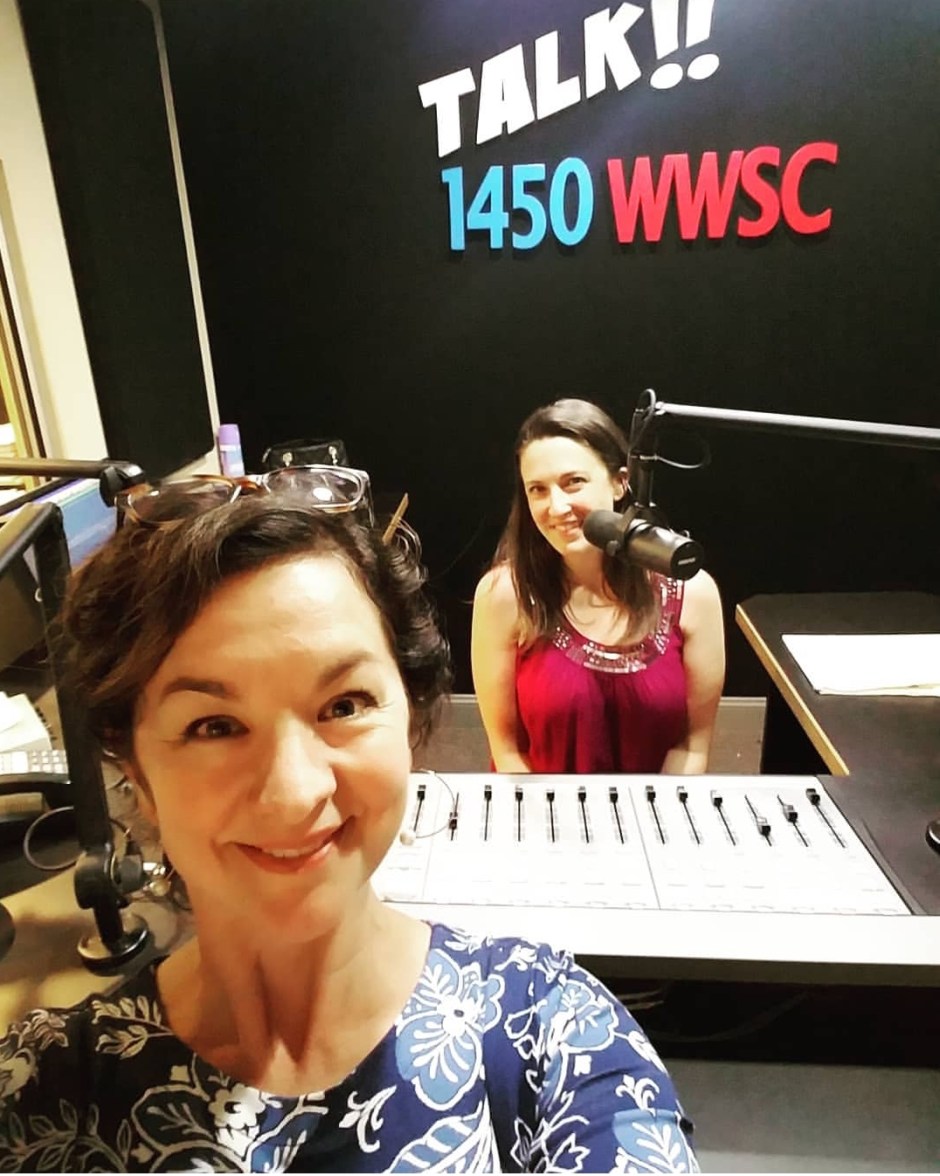
Wendy Waldron was interviewed on the Adirondack Regional Chamber of Commerce’s I’m In With The Chamber radio show in July 2019, with host Amanda Blanton.

Thank you to the Saratoga Business Journal and Glens Falls Business Journal for the feature story on WaldronWorks this past June.
Wendy Waldron has taken her years of experience and success and created her own consulting firm that reaches clients from Albany to the Adirondack Mountains.
WaldronWorks officially launched in March of this year with a soft opening a few months prior. The firm took on their first client in December, providing operations leadership.
Originally from Queensbury, Waldron said family roots in the area that go back for generations is one reason she wanted to open up her business in the area that she loves, the Adirondacks.
“I love strengthening our community and local economy by supporting our entrepreneurs,” said Waldron.
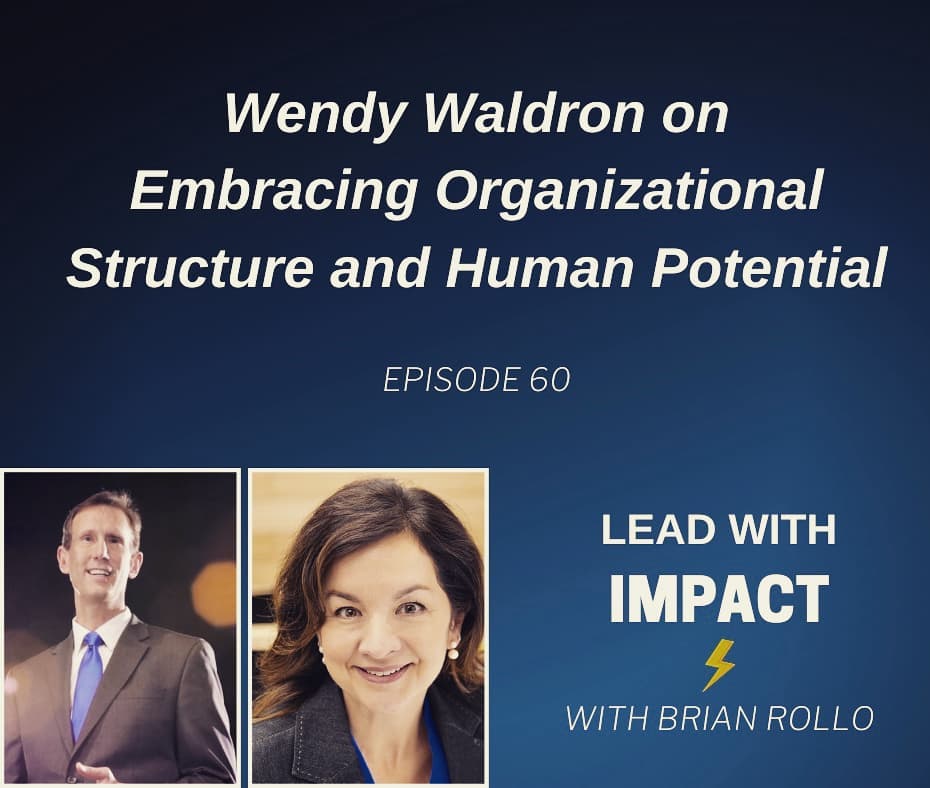
Recently, WaldronWorks was featured in Brian Rollo’s “Lead With Impact” podcast.
Wendy Waldron is an accomplished EOS Implementer, medical practice executive, project manager, energy aligner, and storyteller. She has long been interested in why we all do what we do, and how we can do it better!
Her work is founded on the belief that human potential is priceless, but that the time and effort we put into our workplaces carry a cost burden.
* How organizations miss out on human potential
* Seeing yourself as the creator of your choices
* Learning to do things without permission
* The danger of structure overwhelming the mission
* The danger of mission without structure
* Why Wendy always worked at the largest organizations she could find
* Working with the healthcare industry
* What is EOS?
* Why everyone needs a coach
* How Barbara Cullen-Chapman gave Wendy trust and confidence
* The power of realizing “It’s Not About You”
Organizational Checkup: https://organizationalcheckup.com
EOS: www.eosworldwide.com
Traction: https://amzn.to/2FaO1dU
Get A Grip: https://amzn.to/35cRQdp
You can connect with Brian at www.brianrollo.com
 WaldronWorks